
Engaging with First Nations communities
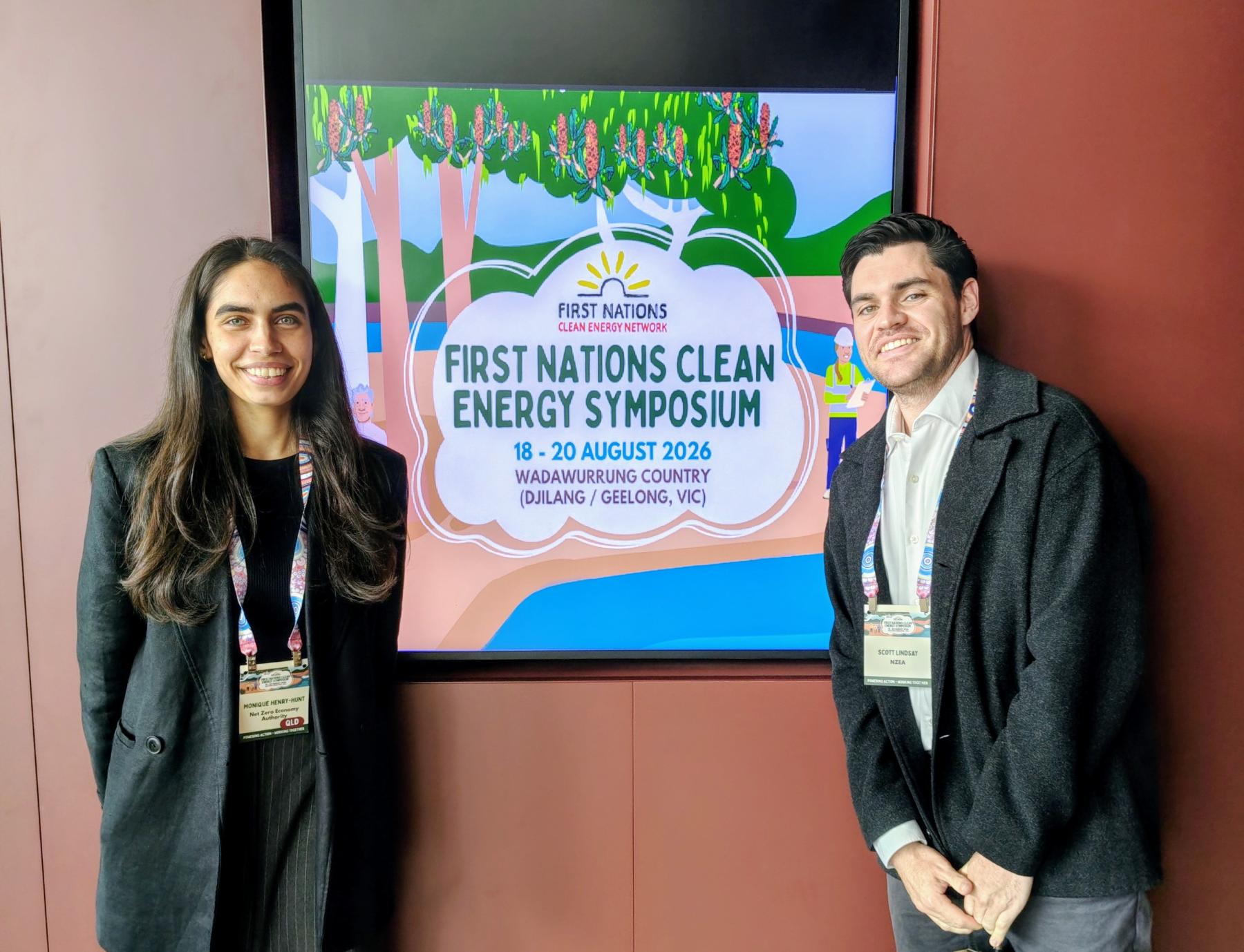
The Net Zero Economy Authority attended the First Nations Clean Energy Symposium, held from 19 to 20 August 2026 on Wadawurrung country (Geelong). The First Nations-led annual event brought together Traditional Owners and Custodians, community, clean energy proponents and government. The event shared experiences about leadership and participation in clean energy projects and discuss key policy challenges.
Clean energy projects being developed across Australia present a significant opportunity to deliver economic benefits and support First Nation self-determination.
First Nations communities are central to clean energy projects
Projects shared at the symposium illustrated how the legal and cultural rights First Nations people hold make them central to clean energy projects and the net zero transition. The scale of projects presented ranged from localised micro-grids in homeland communities to equity arrangements in large-scale projects. The projects also evidenced that First Nations people can participate as genuine partners and as project proponents.
Our team heard that clean energy projects are also contributing to greater energy security for people living in isolated and remote communities, alleviating health and financial pressures.
Importance of meaningful engagement
First Nations organisations reflected that genuine partnerships based on trust were central to their ability to meaningfully engage with clean energy projects. In many cases, First Nations participation has been enabled through resourcing and support that allows for the negotiation of equitable outcomes. Meaningful engagement with First Nations people is an expectation of clean energy projects being developed on Country.
The development of clean energy projects in the net zero transition presents a unique opportunity for the self-determination of First Nations people, who want to control decisions affecting Country. However, availability and accessibility of capital remains a significant barrier to meaningful First Nations participation in clean energy projects.
Grant program
The Minister for Clean Energy and Climate Change, Chris Bowen, announced the First Nations Clean Energy Projects – Pilot Grants program. The program will provide funding to First Nations organisations to develop and progress clean energy projects.
The pilot grant is part of the broader First Nations Clean Energy Program, part of the Australian Government’s work to deliver the First Nations Clean Energy Strategy. The government will invest $70 million over 3 years from 2025 to deliver the program.
Engaging with First Nations communities
Our team visited the Latrobe-Gippsland region to engage with Traditional Owners in August. NZEA staff visited the Krowathunkooloong Keeping Place. The visit opened a small window into the deep history of First Nations people in the region.
Staff then attended the Gunaikurnai Land and Waters Aboriginal Corporation’s (GLaWAC) Bairnsdale office. During a discussion with 2 Elders, they learned about GLaWAC’s journey to achieving Native Title. Both Elders spoke about their deeply personal experiences of their connection to Country.
Staff also heard from the GLaWAC CEO and a senior cultural advisor about the organisation’s strategic vision for self-determination. This was particularly relevant in the context of the current energy and net zero transition.
On 17 August 2026, GLaWAC launched their 'Yesterday, Today, and Tomorrow' Energy Strategy at the Gippsland New Energy Conference. The strategy outlines five strategic priorities for realising the opportunities of the energy transition:
- economic development
- partnerships
- community benefits
- household energy
- healing Country.
Reflection from the team
Visiting the Bairnsdale region and engaging with community was an important experience.
The Krowathunkooloong Keeping Place was an impressive collection of cultural items. It includes traditional weapons and a bark canoe but also tells stories about the experiences of First Nations people related to settlement and government policies.
It was exciting to hear about GLaWACs strategic direction and their focus on leveraging relationships of partnership in the clean energy transition. This will enable agency and contribute to their sovereign wealth.